Research Assistant · The University of Hong Kong

Cong Feng奉聪

Connecting genomic variation
to the traits it shapes.

I study the genetics of wheat and pea, and build tools that turn genomic data into biological insight.

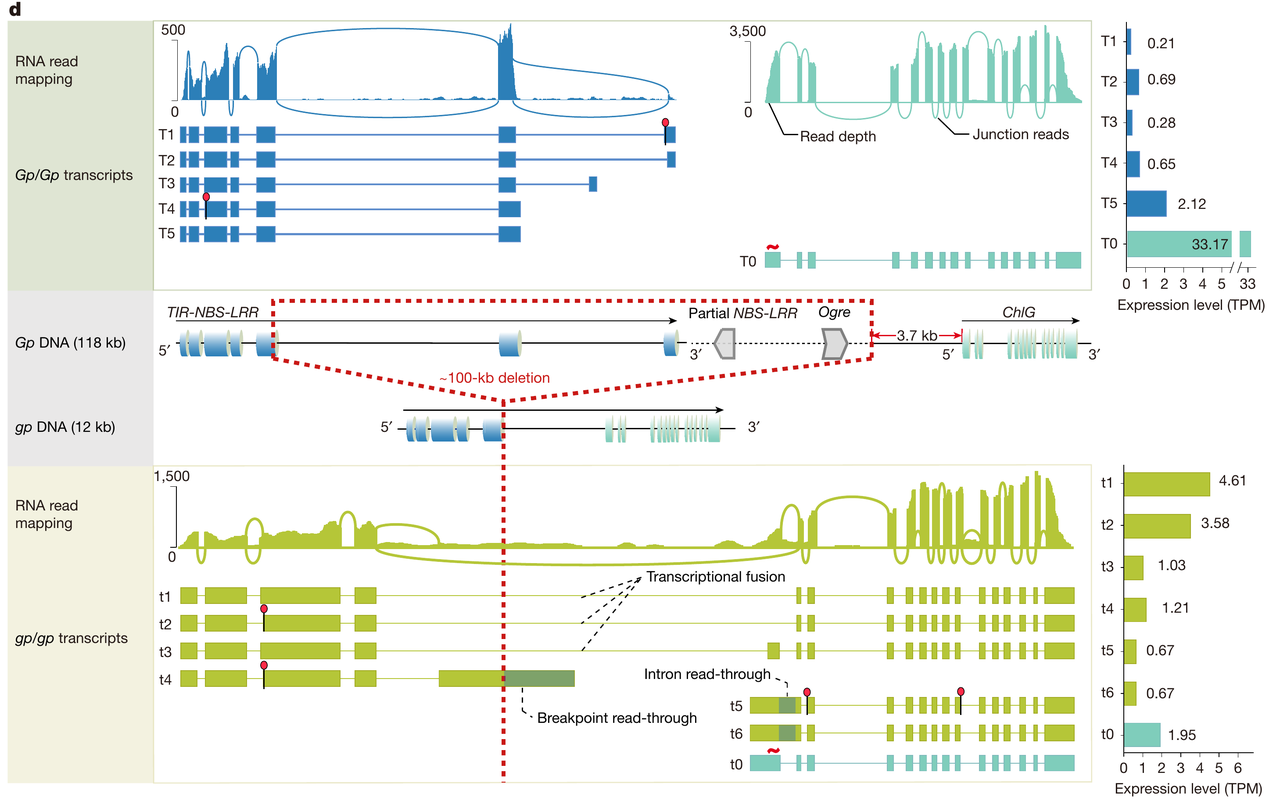
Research workflow illustrated with peas: genomic variation, phenotype, functional variants and haplotypes. Not to scale.

Research thread

One question.
Connected approaches.

  1. 01 / OBSERVEGenomic variation

    Population genomes & haplotypes

  2. 02 / UNDERSTANDTrait interpretation

    Genes, alleles & biological evidence

  3. 03 / BUILDResearch tools

    Reproducible analysis & usable outputs

  • Bioinformatics
  • Population genetics
  • AI for biology · exploring

01 / Research

Selected
work.

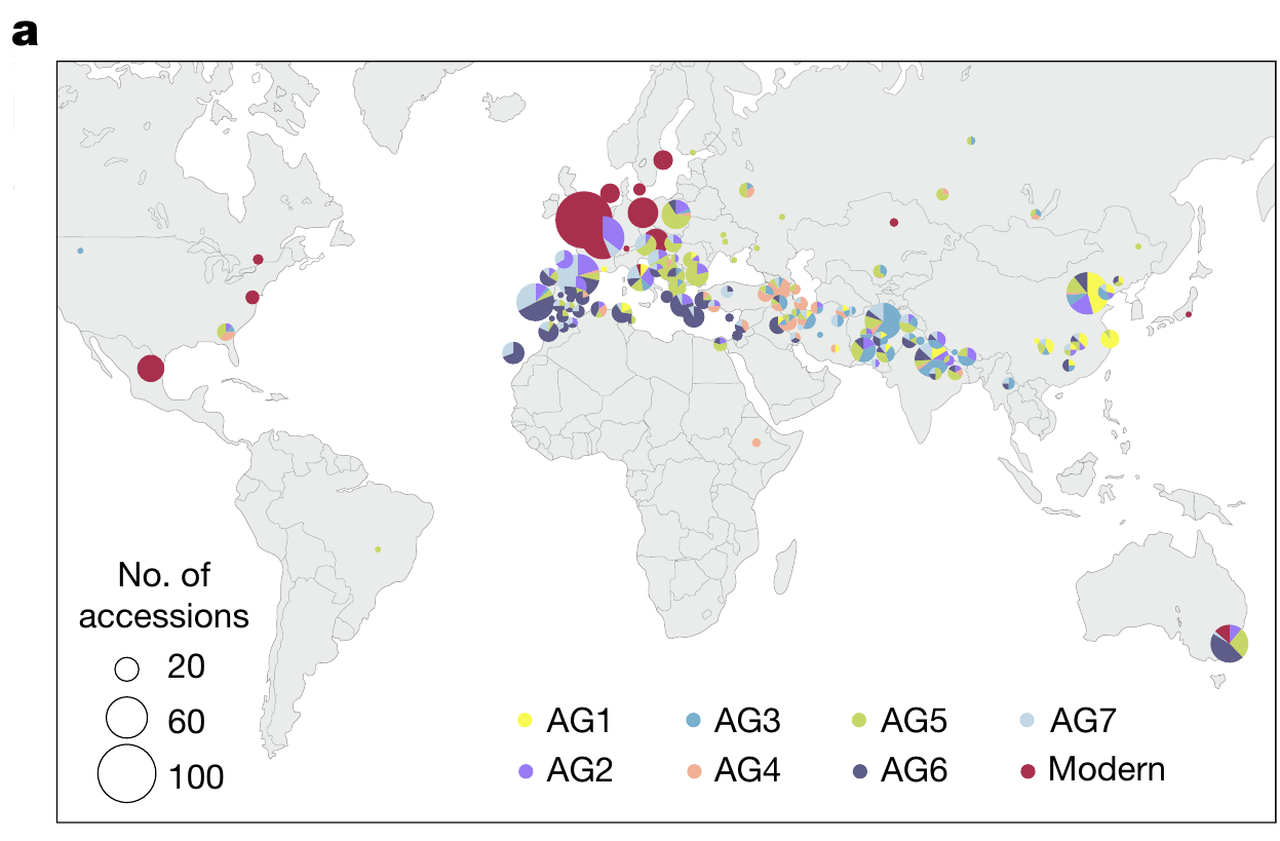
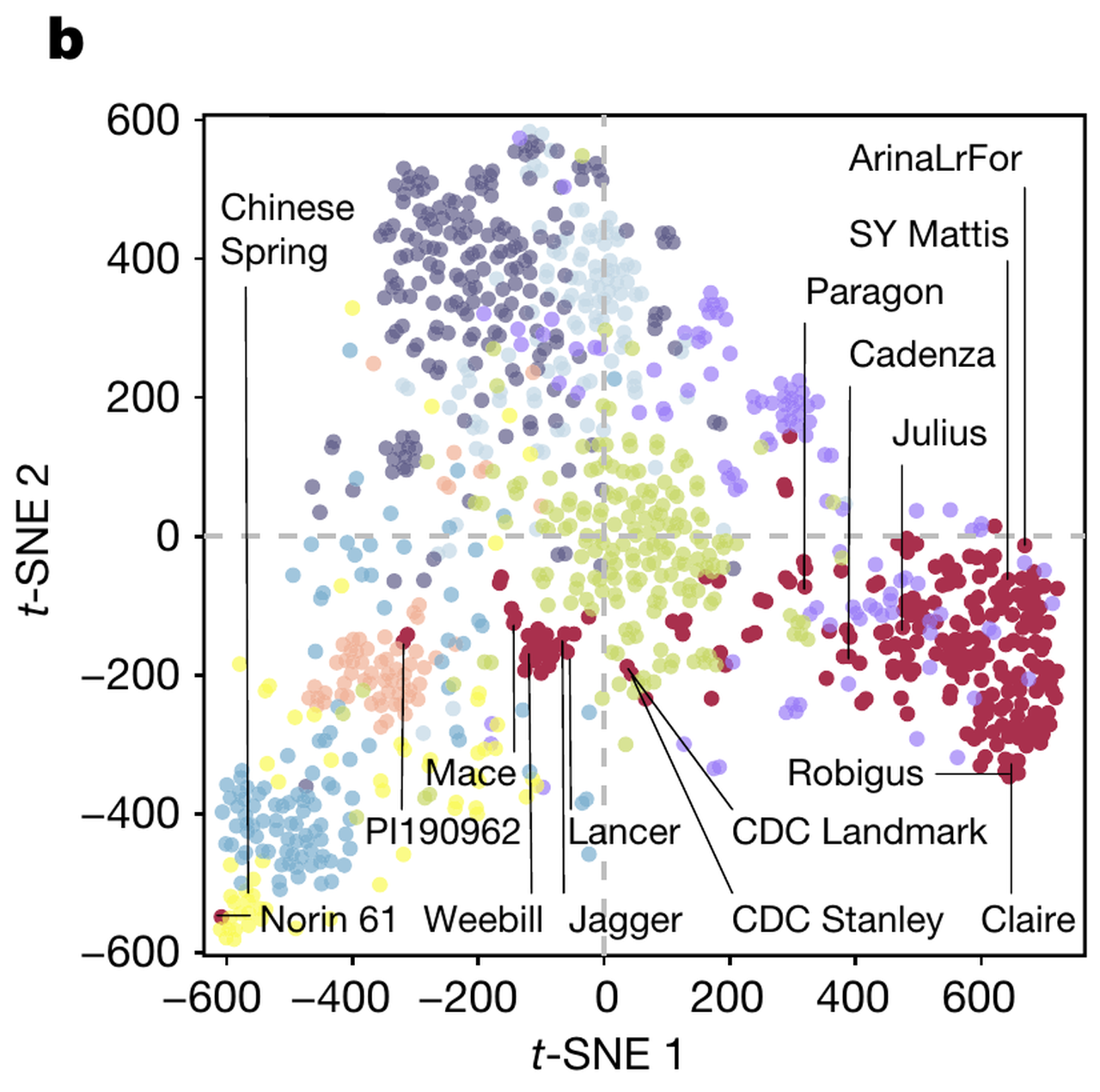
  1. Panel a of Figure 1 from the wheat study: geographic distribution of accessions. Panel b of Figure 1 from the wheat study: t-SNE population structure.
    Nature202401 → 02

    Harnessing landrace diversity empowers wheat breeding

    My contribution

    I co-led variant discovery for 1,051 Watkins accessions and developed LD-based haplotype and NAM-GWAS workflows.

    Population structure, NAM imputation and TagSNP design.

    Watkins & Worldwide Wheat G2B
    Authors & citation

    Shifeng Cheng, Cong Feng, Luzie U. Wingen, Hong Cheng, Andrew B. Riche, Mei Jiang, Michelle Leverington-Waite, et al.

    632, 823–831 · DOI: 10.1038/s41586-024-07682-9

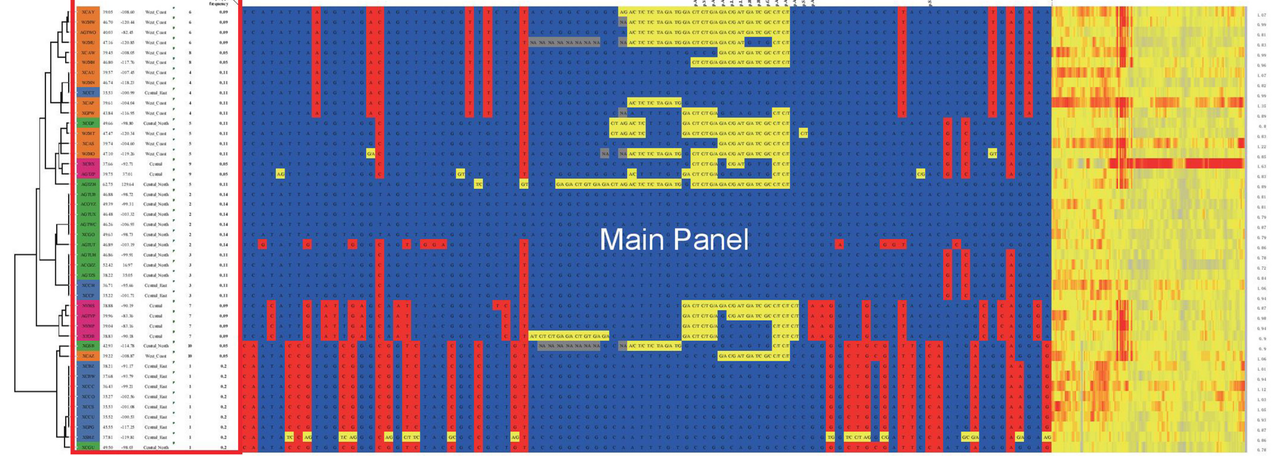
  2. Figure 3A from the HAPPE paper: an Excel haplotype matrix with a sample tree, sample details and read-depth heatmap.
    Frontiers in Plant Science202202 → 03

    HAPPE: population haplotypes in editable Excel tables

    My contribution

    I developed HAPPE to make population haplotypes easy to analyse, visualise and share in editable Excel tables.

    Scientific software I developed and maintain.

    Explore the source code
    Authors & citation

    HAPPE: a tool for population haplotype analysis and visualization in editable Excel tables.

    Cong Feng, Xingwei Wang, Shishi Wu, Weidong Ning, Bo Song, Jianbin Yan and Shifeng Cheng.

    13, 927407 · DOI: 10.3389/fpls.2022.927407

Further publications 04
  1. 2025 / Nature Plants

    Septoria tritici blotch resistance gene Stb15 encodes a lectin receptor-like kinase

    Amber N. Hafeez, Laetitia Chartrain, Cong Feng, et al.

  2. 2024 / Communications Biology

    Improving wheat grain composition for human health by constructing a QTL atlas for essential minerals

    Petros P. Sigalas, Peter R. Shewry, Andrew Riche, Luzie Wingen, Cong Feng, et al.

  3. 2024 / Nature Plants

    The wheat powdery mildew resistance gene Pm4 also confers resistance to wheat blast

    Tom O’Hara et al. · Co-author: Cong Feng.

  4. 2020 / Genome Research

    An efficient RNA-seq-based segregation analysis identifies the sex chromosomes of Cannabis sativa

    Djivan Prentout, Olga Razumova, Bénédicte Rhoné, Hélène Badouin, Hélène Henri, Cong Feng, Jos Käfer, Gennady Karlov and Gabriel A. B. Marais.

02 / Build

Methods &
resources.

Research tools · HAPPE

A working view
of population haplotypes.

HAPPE brings haplotype analysis into editable Excel tables, so researchers can inspect variants, discuss patterns and work with the results.

HAPPE / Population haplotypesEditable Excel
SampleS1S2S3S4S5S6S7S8
AAAGGCTTA
BAAGGCTTA
CGGAACTTA
DGGAATCCG
EAAGGTCCG
FGGAATCCG
Illustrative output · example samples and variants

Pipelines & Databases

More on GitHub

Genomic analysis workflows

  1. 01
    Variants

    Variant discovery
    & quality control

  2. 02
    Haplotypes

    LD-based matrices
    & NAM imputation

  3. 03
    Traits

    NAM-GWAS & interactive
    Manhattan plots

Working toolkit

  • Python
  • C / C++
  • R
  • MySQL
  • HTML
  • Java

Shared infrastructure

G3RP.

I developed the Global Grain Genomics Research Program portal as part of my work on shared resources for crop genomics.

Visit the platform

Collaborative resources

Related to my wheat and pea research;
I contributed to these data portals.

Website creation: Zejian Huang.

Wheat genomicsWatkins & Worldwide
Wheat G2B
Pea geneticsMendel Pea G2P

03 / Background

A research
continuum.

2015 — present

  1. Sep 2015 — Jul 2019

    Chongqing Medical University

    B.S. in Bioinformatics

    A foundation in genetics, statistics, mathematics and genomics, alongside self-directed programming study.

    Genetics, statistics & code

  2. Jun — Aug 2018

    BGI Group

    Shenzhen

    Bioinformatics Engineer Intern

    De novo genome assembly for Lycium ruthenicum and L. barbarum, and pipeline development for cysteine-rich peptide analysis.

    Genome assembly → computational pipelines

  3. Jul 2019 — Jan 2026

    Agricultural Genomics Institute

    Chinese Academy of Agricultural Sciences · Shenzhen

    Bioinformatics Engineer / Assistant Researcher

    Wheat and pea population genomics, gene discovery, analytical workflows and research tools.

    Genomic variation → trait interpretation → research tools

  4. Late Jan 2026 — present Current

    The University of Hong Kong

    Research Assistant

    Continuing in computational biology, with an emerging interest in AI-enabled biology and agentic scientific systems.

    Genomics & genetics → exploring AI for biology

Get in touch

Biology, code
and the next question.

Let’s compare notes.

On genomics, scientific software, or AI for biology.

congfeng97@gmail.com
A pocket greenhouse

Let curiosity grow.

Two pea plants. A little inheritance. What might grow?

Ready when you are.

Choose your parents, then grow a pea.

Parent one
Parent two

Chances for each offspring

Yellow 75%Green 25%

Your little harvest

No peas yet. Every draw is a fresh chance.

One allele comes from each parent. Y gives yellow seed colour; green appears with yy.